Home Workout Routines with Coach Chris Giesking
* Time Efficient
* Little Equipment Needed
* Improve Body Weight Strength Ratio (Muscle Balance)
* Enhance Body Control, Coordination and Stability
* Provide Self Awareness to Limitations and Endurance
* Low Impact for Healthy Joints and Longevity
* Intensity can be controlled by Speed, Time, Skill and Fitness Level
Suggested Equipment:
Yoga Mat, Pull Up Bar, Bench or Box
#1.
20 minutes continuous movement of:
(Small Rest Breaks When Needed)
A1 – Air Squats 10 with slow 5 count on downs, then quick ups
A2 – Push Ups 5 with slow 5 count on downs, then quick ups
A3 – Floor Superman 30 seconds
A4 – Inverted Rows 10
A5 – Glute Hip Bridges 10 with 3 second Hold at Top
#2.
20 minutes continuous movement of:
(Small Rest Breaks When Needed)
A1 – Single Leg Balance to Toe Touch 10/10
A2 – Step Ups 20/20
A3 – Pull-Ups 10 (Use Band if Needed) Focus on downs 5 second slow
A4 – Jumping Jacks 40
A5 – Push-Up 10 with Alternating Shoulder Taps
#3.
Two – 10 minute workouts doing continuous movement of:
(Small Rest Breaks When Needed)
A1 – Side Lunges (R&L) 10/10
A2 – Bear Crawl 20 meters
A3 – Pull Ups 10 (Use Band if Needed) Focus on downs 5 second slow
A4 – Air Squat to Calf Raise 15
B3 – Shoulder Press 10
#4.
Two – 10 minute workouts doing continuous movement of:
(Small Rest Breaks When Needed)
A1 – Lunge Matrix 18
(rep 1 forward, rep 2 right side, rep 3 reverse lunge)
A2 – Chest Dips 10
A3 – Side Plank Hold (R&L) 30 seconds each side
A4 – Sit-Outs 10/10
A5 – Shuttle Run (10m – 10m – 10 meters)
If you love the outdoors your metabolism will thank you. Exercising outdoors provides an opportunity to be physically active in a constantly changing environment and the more challenging the activity, the harder the body has to work to sustain an efficient work rate. Temperatures can make a big impact on the body and raise your metabolic rate in cold or hot weather.
1st off, lets pick some activities you can do outside that will be easy to include in a weekly or monthly routine. Team Sports, Biking, Running, Hiking or a Water activities are just some starters.
Tip #1
Understand your body responds differently to environment and type of fitness intensity its given. If the temperature and wind are a factor, know that its a completely different workout than its opposite. Tip 1: Pick one day of the week to “go long” and another to “go short” On these days, pick your outdoor activity based off weather and apply it.
Long day: Slow and controlled intensity with varying skill work.
Short day: Sprints and high intensity intervals.
Tip #2
Life, work and your schedule sometimes has you with no other choice other than driving to the gym. The hassle of outdoor fitness takes a lot of planning, especially if your hobby is equipment driven. Tip 2: Incorporate body powered equipment to get to the gym, this includes running to the gym. Once your there, do a quick strength circuit and power back home. Challenge: Do a time trail on how fast you can make it to the gym.
Tip #3
Invite friends to join you in your quest to enjoy fitness outdoors. They can bring intensity to the workout or even form a game to complete. Volleyball, baseball, rugby, kickball, spike ball, etc. Aim for once a week to be group driven.
With a little creativity and imagination you can replicate almost any gym exercise outside, especially if you live near a park. Try pull-ups, step-ups, push-ups and other body-weight exercises. When it’s a beautiful day, take advantage of the opportunity to exercise outside.
Questions to ask yourself.
-What types of outdoor activities do I enjoy?
-What do I get from being outdoors?
-Is my current exercise plan sustainable and most importantly, enjoyable?
-What can I do inside the gym to make outside hobbies physically more enjoyable?
Some of you will like this, some of you will not like this and some of you need to hear this. You are the sum of the choices that you have made up until now. Stop feeling sorry for yourself and telling a sob story of negativity. You are not fragile nor a victim, so stop throwing your hands up in the air every time you have a set back or feel like a failure. Tell a new story, one of positivity and self determination. Get on track, drive on and find your path again. At the end of the day your emotions and feelings don’t really matter, its only the actions you take that matter. Lets do this, I believe in you.
5 Practices For Life.
Keep learning about Nutrition – Know exactly what you are consuming. This takes practice and giving a f#$k. Here’s my technique. I simply ask myself: Do I have Protein, Healthy Carbs and Healthy Fat in this meal? Will this meal meet my needs for the next 3-4 hours? Will this meal make me healthier in the long term? Good nutrition habits need to be constantly refined. Its all about planning. Remember the 5 P’s Proper, Planning, Prevents, Poor, Performance. This should be stamped to your refrigerator, book bag, gym bag, car door, office seat, credit card and possibly your forehead. Put in the work and expect adversity, everyone struggles, even the fake instagram models. And yes,,,,, this will take a bit of time. So read books, listen to podcasts and think for yourself, not your friend that said they were gonna try a new diet.
Hydration – Its generally recommended to drink 1/2 your body weight in ounces per day. My technique is drink throughout the day, but more importantly drink full bottle of water about a half hour before a meal. If your a coffee drinker this crucial to get water before and after your coffee fix. Don’t wait, front load your water in the morning. Great morning ritual is: Upon waking drink 8-12oz. water + sea salt + lemon. All natural electrolyte and detoxification mix.
Sleeping – 8 hours is always preferred, but this depends on stress. If your body is stressed, you won’t be sleeping well. When cortisol (stress hormone) levels are up, melatonin (sleep hormone) levels will be low. Melatonin can be affected by, eating carbs close to bedtime, caffeine, blue light (cell phones) and about 10 thousand other factors. See my article on Sleep. If your a person who gets sick a lot, check your sleep quality average. It is better to be consistent rather than to use the weekend to “get back” the lost sleep, during the week.
Exercising – MOVE YOUR ASS and MOVE IT WELL! People have been healthy for thousands of years without barbells, shake weights, stair masters and crossfit. Pick something that makes you happy, learn to do it right and roll with it.
Listening to your Body – It starts with breathing and checking in to your parasympathetic nervous system. Down regulation and lowering stress levels. YES, listening to your body is understand the signs of being tired, having low blood sugar, being dehydrated, having brain fog, having muscle soreness vs. joint soreness. It’s also being self aware of anxiety, but also ready to react to what is needed at the moment. Learning how YOUR machine operates is crucial, not only to survive, but to thrive. If you have the right mindset you can listen to your body and make faster decisions to correct any course. Breathe, Listen, Take Needed Action, Repeat.
What really matters?
It’s up to you. In your big picture, it could mean anything. What matters to me, is different from what matters to you, right? So lets define fitness first.
Fitness: fit·ness (noun) – the condition of being physically fit and healthy.
synonyms: good health, strength, robustness, vigor, athleticism, toughness, physical fitness, muscularity; the quality of being suitable to fulfill a particular role or task.
Facts:
-Less than 5% of adults participate in 30 minutes of physical activity each day. Only one in three adults receive the recommended amount of physical activity each week.
-More than 80% of adults do not meet the guidelines for both aerobic and muscle-strengthening activities, and more than 80% of adolescents do not do enough aerobic physical activity to meet the guidelines for youth.
-Americans are the biggest consumer of weight loss products (80%) in the world, yet still lead the world in obesity and unhealthy lifestyle.
So what really matters? Again, it is up to you, but the statistics and definition are clear. I hope your not settling with “living a healthy life” and avoiding being one of these pathetic statistics. Go for your ultimate fitness goal and never look back. Why settle for just enough when you can do the hard work and be your best you.
Here are some fitness websites that have basic standards and above standard achievements:
1st off, recognize that opportunity for quality movement happens every second of your day. Your posture, body language and your movement efficiency are directly related to your energy levels, mood, mind set and confidence. All of these factors are controllable, but if your movement is subconscious dysfunctional, you wouldn’t know it unless you were in pain or uncomfortable. So the goal is to become, conscious functional or simply said, have body awareness and control.
Your movement profile can be determine by many factors, however to make things simple, I’ve broke it down into 3 categories.
1. FUNCTIONAL – NO RESTRICTIONS
No movement restrictions and achieves strength performance / conditioning when done consistently. Able to do the following patterns in a workout or under stressful conditions.
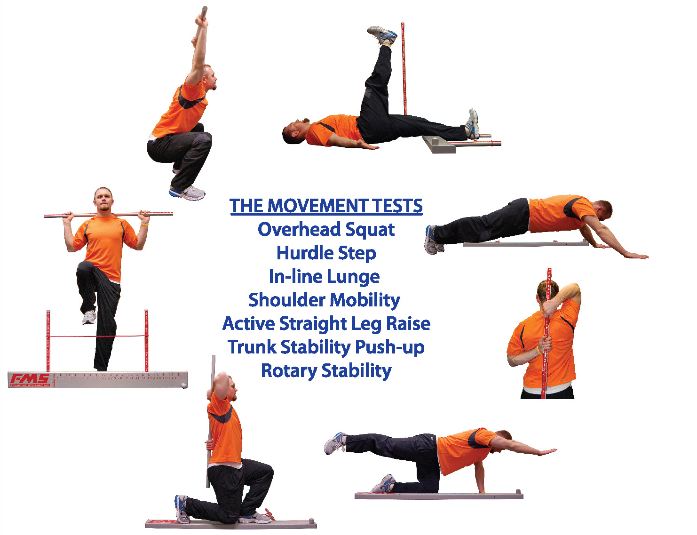
-Toe Touch & Active Straight Leg Raise (See FMS Screen)
-Deep Squat & Single Leg Squat
-Upper Body Push (Horizontal & Vertical) i.e. Push-Up & Shoulder Press
-Upper Body Pull (Horizontal & Vertical) i.e. Inverted Row & Pull-Up
-Hip Hinge & Single Leg Hip Extension i.e. Dead Lift & Hip Bridge
-Walk, Jog , Run and Sprint (No over-pronation or gait asymmetry issues)
-Crawl, Climb and Jump (Body Weight Ratio : Performance Levels)
2. CONSCIOUS DYSFUNCTIONAL – AWARE OF SOME RESTRICTIONS but NO PAIN
Has some movement restrictions and struggles with mobility. Is aware of movement restrictions, but is able to maintain fitness level if done consistently. Not able to do one or more of the following:
-Toe Touch & Active Straight Leg Raise
-Deep Squat & Single Leg Squat
-Upper Body Push (Horizontal & Vertical)
-Upper Body Pull (Horizontal & Vertical)
-Hip Hinge & Single Leg Hip Extension
-Walk, Jog , Run and Sprint
Crawl, Climb and Jump
3. SUBCONCIOUS DYSFUNCTIONAL – UNAWARE OF PAIN & RESTRICTIONS
Exercises without knowing what is good or bad. Avoids most moments because of discomfort or pain and has difficultly with results. Pain is a cycle, sometimes worse and often times unexplainable. Frustrated with exercise due to cycle of body soreness.
Most people fall into the 2nd category of Conscious Dysfunctional. Always working on something, always trying to improve mobility and stability in hopes of turning it into strength and performance gains. Aware of short comings, but get results if consistent in workouts. The biggest advice I can give for category 2, is to prioritize. Here is a list of movements to work on, from the highest priority to the least.
1st, “Asymmetries” If you have a RIGHT / LEFT asymmetry, that takes priority #1. Achieve balance in mobility and stability of the Ankle, Hip & Shoulders. It might seem minor or have no pain, but a tight RIGHT shoulder can effect your LEFT hip while running, just like a tight LEFT hip flexor can effect your RIGHT low back and lead to PAIN or DISCOMFORT. LEARN to LISTEN to your body.
2nd, Active Straight Leg Raise and Shoulder Mobility. The Hips and Shoulders control the strength production and power the body can produce. These are crucial for performance. Proper mobility & stability in these two joints can keep you injury free and speed up the recovery process of any workout style. (See FMS Screen)
3rd, The Core. The center of the body will be the start and finish of most movements. The frame of the body is the core and the core is the foundation. Energy travels through the center. If you want to transfer energy, the core acts like a conduit of electricity, channeling power to your limbs. Your hips and shoulders generate power and a strong core keeps a stable platform for energy efficiency & power production. The core is a force multiplier.
We need to have fun in this life long journey of health and fitness. It’s hard enough just watching what we eat on a daily basis, little lone making it to the gym consistently. Whether you have big fitness goals or just maintaining your health, its still important to find satisfaction and happiness from physical activity. If your having fun, it doesn’t seem like work. If your routine needs an overhaul, get a hold of me or just play some better music while you workout. Haa but seriously. If you’ve been doing the same routine since NAM, maybe its time to change things up.
When I coach, my question to whom I’m training is simple in regards to their program design.
Is it sustainable and can it be a lifestyle? Do you get satisfaction and is it enjoyable?
The challenge from there will be getting results with the level of intensity needed to meet your goal. Every fitness program should have sustainable elements of: F.I.T.T. Frequency of days working out per week Intensity of workouts and energy systems conditioned Time under tension per workout and volume of work completed Type of workouts (they should be FUN) Remember the gym is just a tool.
-Education – To Empower Yourself with Kick Ass Knowledge
-Nutrition – Thriving is Mindful Quality Nutrition choices for Vitality
-Strength – The Right amount to do get the Job Done with Stamina and then Some
-Movement Quality – for Efficiency, Injury Prevention and Physical Durability
-Energy System Conditioning – for your Lifestyle, Metabolism and Athletic Endeavors
Education:
It is your physical health responsibility to be informed, take care of yourself, ask the right questions, read from multiple information sources and use best practices to keep healthy. A victim mindset is poison for a healthy mind.
Nutrition: Eat mindfully as much as possible, PERIOD. But seriously, eat with vitality in mind as an outcome long term. Their is no one diet plan that is for everyone. However, A Raw or Whole Food Diet, Paleo, The Zone Diet, Mediterranean Diet, Vegetarian Diet all have similar characteristics. Healthy eating is not about deprivation, following strict nutrition rules or starving yourself to lose weight. It is about getting healthy and staying healthy by making smarter food choices, including watching portion sizes, limiting fat consumption, eating natural, whole foods like fruits, veggies and whole grains and reducing processed food in the diet.
Strength: “My strength comes from the abdomen. It’s the center of gravity and the source of real power. Strength train, but keep your main focus on your art.” Bruce Lee
Train for the right amount of strength you need with a foundation of stability and always remember: Methods are many, principles are few, methods often change but principles never do. Do your fucking homework and train the right way.
Movement Quality: Best practices when it comes to moving well can include a consistent regime of flexibility and mobility exercises. Consistency will get results and reward you with durability and efficiency . Having good body control and timing is different for different sports. The more skilled movement the more practice it will take. Everyday you should move every joint in your body in healthy ranges of motion. If I had to make one priority for my fitness, it would be to move well, then move often.
Energy System Conditioning: Your Lifestyle, your Metabolism and any Athletic Endeavors depend on your energy system quality. Without getting to sciency, the phosphagen, glycolysis and the aerobic system need to be trained. In plain terms your: Sprint, Run & Jog and Walk endurance all have different systems of needs. If you want to thrive in total health they all need attention to some degree. This may look different for grandpa and completely different for little Jonny on the rugby team. Depending on your goals and lifestyle a thriving heart needs conditioning. Heart disease is the leading cause of death in both men and women in the United States.
1. Skill Based Drills 2. Mobility & Stability Development 3. Power & Explosion
Skill Based Drills: Practicing, rehearsing and patterning the sport skills you want to be athletic at takes repetitions. Skills are formed over time and long hours of zeroing in your craft. Whatever your sport is my #1 top exercise is, working on your weaknesses. For example, start your workouts with drills or games that need skill and coordination. This can be done with creativity, but it will get the athletes attention and focus. The drills or games should be focused on timing, coordination and a weak aspect of an athlete. For example: Only use your non dominant leg, arm or force your weak side to perform at any athletic task or game. 5-10 minute drills or game time is ideal.
Mobility & Stability Development: Tight muscles are not always a bad thing for an athlete, however poor joint mechanics can be problematic and lead to injury. Here’s the difference: If a muscle is tight, its tight for a reason. The muscle is protecting itself by restricting movement that it doesn’t have stability to move into. If the muscle is strong and the joint feels stable, more mobility will given in that movement. My #2 exercise is joint mobility and stability exercises. Pick a joint and pattern each workout and do 1-2 drills to achieve maximum joint stability then move through range of motion to achieve athletic and sport specific mobility. For example: Holding a deep lunge position with perfect joint mechanics for a length of time or moving through full range of motion at different tempos with quality. This can be sport specific, but functional movement and full range of motion should be achieved 1st. For example: Work on basic patterns 1st, such as Squating, Hingeing, Lunging, Pushing Vertical & Horizontal, Pulling Vertical & Horizontal and then Rotations Combos.
Power & Explosion: Depending on the sportathletes need to warm up properly for explosive movements. Most full body power movements will come from the power of the hips and various rotation patterns. To activate power & explosion use plyometric or speed drills before games. My #3 exercise is hip extension drills that get the posterior muscles firing explosively. Olympic Lifting can be an excellent choice, but in a warm up, I often choose non loaded body weight movements. For example: 3 exercises done in a circuit. 1st: Hip bridges or hip thrusts, both double leg and single leg styles. 2nd: Tuck jumps or jump lunges 3rd: Med ball rotation tosses or throws.
I haven’t just studied injuries to help my clients recover, I’ve lived them – extensively. I’ve had multiple broken bones, torn and pulled muscles, torn ligaments, torn tendons, a stabbing puncture to my abdominals, cuts, concussions, surgeries, scrapes, burns, bruises and fucking everything else. All of my injures have their own unique story, but irregardless, I know they all happened for a reason. Some were purely poor choices, and some where beyond my control. Reasons of being over aggressive, being at the wrong place at the wrong time, immaturity, foolishness, ego, pride and many, many more. I’m not perfect, but I have tried to learn from them all.
My last major injury was a few years ago. It was due to overtraining and repetitive explosive sprints while fatigued. Not a good combo by the way. I should have known better than to push it, but I didn’t see any reason to stop other than sore, tight muscles. I had a common, lose-lose no pain, no gain mentality. And then POP! The sound I heard echo throughout the gym. I asked myself, “did someone hit me” but no-one was around. Just my floppy foot from my torn achilles tendon. I denied it at first, but then its set in. I’m FUCKED! The rest is a blur. The nightmare of getting treated at the VA (Veterans Hospital) for hours, just to have them tell me “keep it wrapped up & ice it.” They scheduled me for another appointment 4 weeks later. WTF!!!! I thought I might get an MRI on the spot, but it was booked and I wasn’t enough of an emergency. Or so they claimed.
I was beyond pissed off by this point, but despite the anger I was feeling at the circumstance, I knew in my gut where the blame belonged. The VA didn’t injure me, I did. It would have helped getting the care I needed, the care that could have made recovery a little easier, I could have blamed government healthcare for leaving me out to dry. But the truth is, no hospital could undo the damage, or turn back time, because it was already done. So I did exactly what I have always done to survive, I dug in determined to heal and I did my own research.
I studied exactly what my body needed to heal itself. I needed to immobilize my achilles for 6-7 weeks in a boot brace with an elevated heal. I learned that I might be better off not getting surgery and healing it on my own. No surgery? Doesn’t everyone get surgery for a torn achilles? This is when I had to grow a pair, get serious about healing and taking care of myself. No one was going to help me and my VA health care was a joke. Complicating things even more, I had to borrow a boot brace from a friend. Yes that’s right, my achilles boot wasn’t even the right healing device, because the VA didn’t give me one at all. However, the VA finally got me an MRI 7 weeks later, after making 27 phone calls and waiting on the phone for fucking hours each time. It was already healing and starting to come together. So by then I wouldn’t let them touch me with a 10 foot stick, even if they wanted to do surgery. Fuck it, I was gonna heal it myself, come hell or high water.
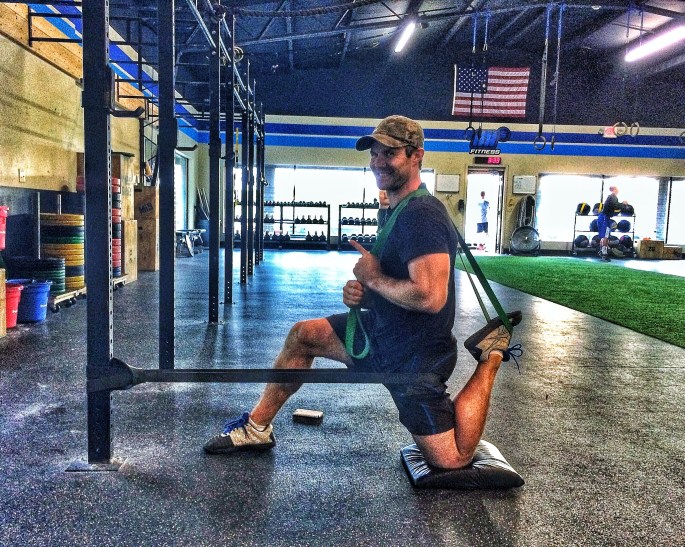
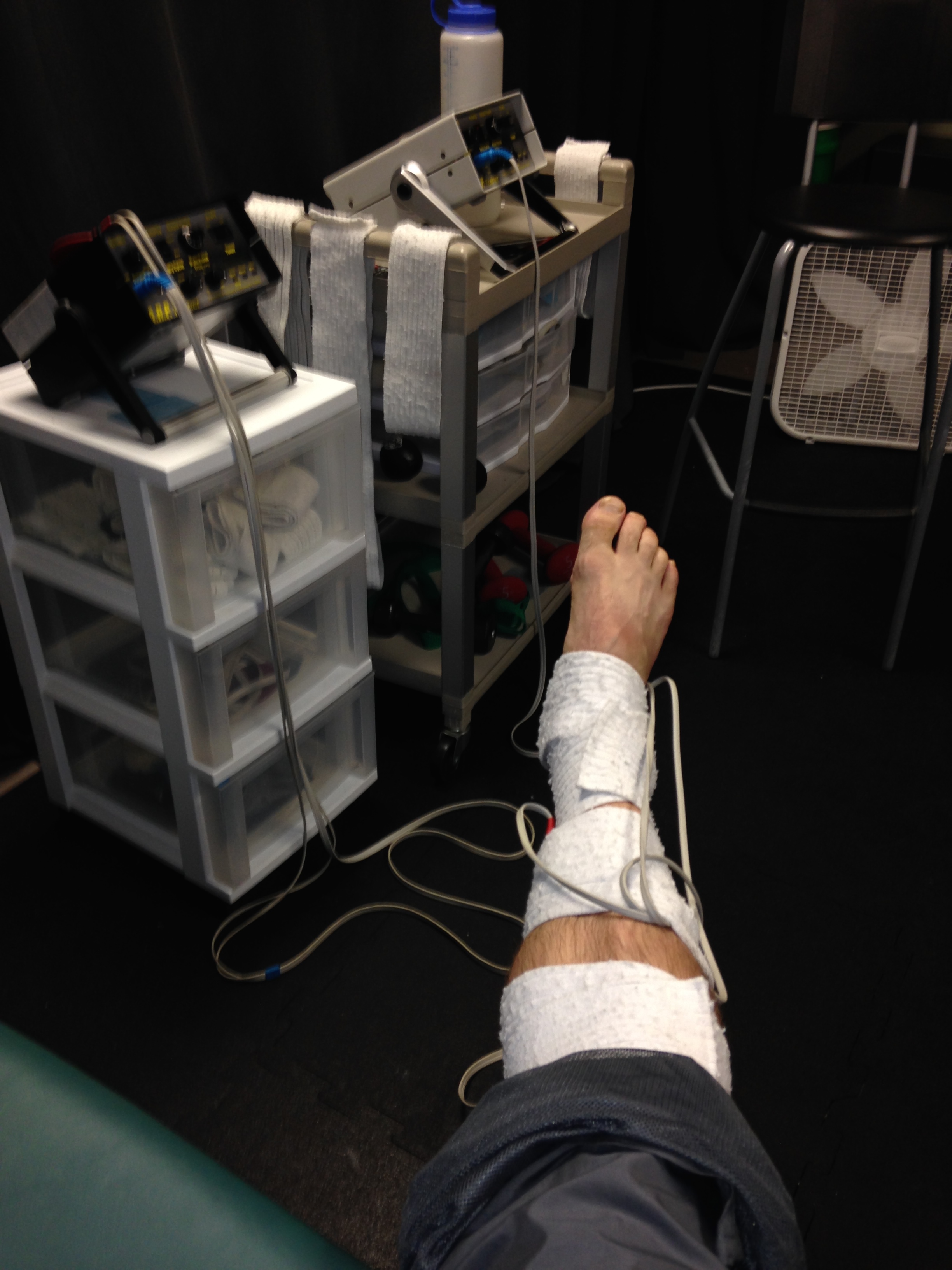
The picture on the left is me doing ARP Wave. A Neuro Therapy Accelerated Recovery Performance Training device. It basically activates muscle & soft tissues to regenerate itself back to recovery status through electric waves. The other picture is me just showing off with my friends brace boot doing one leg training. Just an example of how hard I wanted to come back.
My injury happened two weeks before the snowboarding season and I was bound and determined to savage the season by healing as fast as possible, even with all my problems with the VA. I was devastated, defeated, frustrated, upset and discouraged that my training regime got me injured. But after 45 + ARP-Wave sessions and a ton of physical therapy I was back on the snow in 3 1/2 months.
You will learn a lot about who you are and what you are capable of, both physically and mentally, during an injury. Believe me, the human body can take a lot, but the human mind is limitless if you believe it is. Only weak-minded people retire after their first injury or set back. What doesn’t kill you makes you stronger. Adversity is nothing to be scared of. Allow yourself to be driven by it and it will become your fuel source. It will make you tough and tough-minded, remember that.
So here’s my advice:
If you are overtraining, STOP. You can easily evaluate if your training methods are getting results with fitness evaluations by a professional. If your overtraining is about losing weight or body fat, get yourself educated on nutrition and energy systems. You’ll find its 70% nutritional and 30% in the gym. Seriously, look at your recovery and nutrition methods. Are they working? So often we work too hard, and not smart. Bodies wear and tear, do the least harm to your body that gets you maximum results. That’s what professionals are there for, to help you find that sweet spot.
Pay attention to tissue health and tight muscles. When is the last time you had a functional movement screen done? If you’re training for a sport, your coaches should be able to spot performance gains or drops. Don’t get yourself injured because you wouldn’t take a day off to recover. You are no good to your team if your injured. When you’re in pain or injured you move differently. You will alter your mechanics to function, but it will become a dysfunction. Putting strength or conditioning on dysfunction only makes the dysfunction worse.
Be patient and be real, but don’t throw your hands up and say this is my only option. Do your homework and be willing to work hard to come back 100%, whatever the cost. You may make a few mistakes with treatment options, but if you’re not getting better, try something else. If you’re not putting in consistent work, then be honest about your effort towards healing yourself. Most people show up for less than half their prescribed therapy sessions before quitting or resorting to surgery, and never get results. The reward is the journey to overcoming adversity, coming out stronger and wiser on the other side.
This is me getting ready for American Ninja Warrior a year and half after my injury. I’m jumping at 50 inches away from the box, that is 34 inches high. Remember, It’s the journey that counts.










 chrisgiesking.com